Back Home

Training & Education

SAHAYA LLC training engagements can combine executive briefings, technical workshops, and applied learning in data, AI, and digital operations. Curriculum, instructors, delivery format, availability, and follow-up support are agreed for each engagement.

Contact
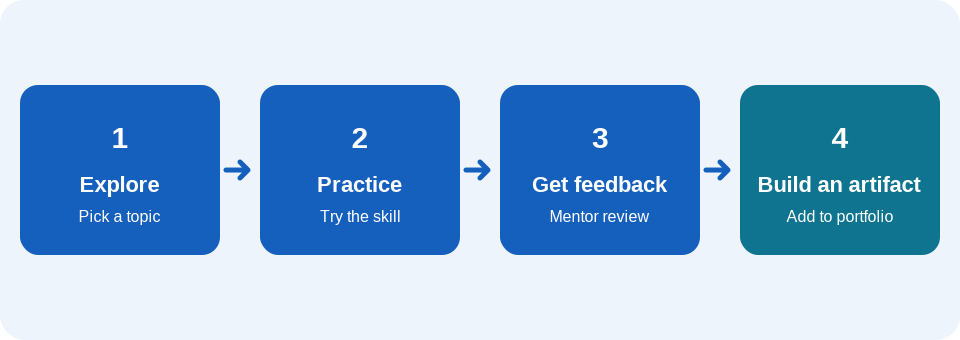
Explore, practice, receive feedback, and build on what you learn.
Training & Education: Explore, practice, receive feedback, and build on what you learn.

Training and education

Discuss scoped SAHAYA LLC executive briefings, technical workshops, and applied learning in data, AI, and digital operations.

Download Training and education (PowerPoint)

Read the English video transcript

[Welcome]
Technology succeeds when people know how to use it. Welcome to SAHAYA. In this briefing, we look at training and education.

[Audience and format]
This briefing is written for the Chief Operating Officer and Chief Data and Analytics Officer. Like every SAHAYA briefing, it follows four steps: Situation, Task, Action and Result. It is a sample scenario, not a client result or a guarantee.

[Situation]
Situation. A new platform launches, but adoption is slow. Users are unsure how to work with it, and teams revert to old habits.

[Task]
Task. Offer training that builds practical skills for executives, practitioners and new team members.

[Action]
Action. Here is how SAHAYA approaches it. First, we assess the audiences and the skills they need, from executive briefings to hands on labs. Second, we design short sessions with clear objectives, real examples and exercises. Third, we deliver training live or on demand, and we provide reference materials for later use. Finally, we measure understanding and application, and we update the material from feedback.

[Reference architecture]
Reference architecture. A sample reference architecture for training and education has four layers. Layer one, audience, covering executives, practitioners and newcomers. Layer two, design, covering objectives, examples and labs. Layer three, delivery, covering live and on demand. Layer four, follow up, covering assessments and updates.

[Result and sample ROI]
Result. In this illustrative example, a team completes a short lab, applies it to its own work, and shares what it learned. For quick reference, here is a sample of the benefits to discuss. Benefit one, faster adoption of new tools and processes. Benefit two, more confident teams. Benefit three, less reliance on a few experts. These are directional examples to frame a conversation. Your results depend on your starting point and agreed scope.

[Industry alignment]
Industry alignment. Training can be tailored to the vocabulary and rules of each industry.

[Values and people in the loop]
Our value of Growth means everyone leaves able to do more. In everything we do, people stay in the loop: your team reviews the evidence, and accountable humans make the decisions.

[Next step]
If this looks like your situation, the next step is simple. Tell us what you are trying to improve, build, migrate or operate, and we will agree a focused starting point together. Visit sahaya.us, and choose Contact.

[Thank you]
Thank you for watching.

This video, including its script, voice-over, images, animation, music and design, is the property of SAHAYA LLC and/or its Affiliates and is protected by law. Any dissemination, distribution, copying, recording, reproduction or reuse, in whole or in part, without written permission is strictly prohibited.

The information shared is for general informational purposes and does not constitute a contract, offer or professional advice. Opinions expressed are those of SAHAYA LLC and may change without notice. All trademarks belong to their respective owners.

If you have received this video in error, please notify SAHAYA LLC and delete it.

(c) 2026 SAHAYA LLC. All rights reserved.

Students and career starters can explore role-based student project paths in business analysis, development, testing, support, cloud, DevOps and data. Review example deliverables and official learning resources, then express interest without committing to enrollment or payment.

Why This Matters

  • Generic training content. Sessions that do not reflect how the work is actually done in practice.
  • Low engagement. Long, passive sessions that do not translate into applied skill.
  • No connection to real problems. Training that never touches the specific challenges your team faces.

What Is Included

  • Executive briefings. Build a shared understanding of decisions and constraints.
  • Technical workshops. Practice scoped tools, patterns, and operating tasks.
  • Custom curriculum. Adapt material to agreed systems and learning goals.
  • Scope-matched instruction. Confirm instructor experience and availability.
  • Follow-up support. Include office hours or review sessions where agreed.

Practical Guidance

Learning Objectives

Identify the audience, prerequisites, tasks, and expected level of independence. Distinguish awareness, supervised practice, and production authorization.

Exercises & Data

Use approved synthetic or non-sensitive data where appropriate. Review privacy and disclosure risk before sharing exercises. Training does not authorize access to client or production systems.

Acceptance & Follow-Up

Agree exercises, assessment methods, materials, and follow-up support. Compare progress against the learners' starting point; attendance alone is not proof of competence or certification.

Reference Process

Reference Process
  1. Concept
  2. Worked Example
  3. Hands-On Practice
  4. Apply & Review

Concept → Worked Example → Hands-On Practice → Apply & Review.

This sequence is a reference for discussion. Responsibilities, access, timing, and delivery commitments depend on the relevant agreement or approved publication.

Getting Started

Share the audience, skills gap, platform context, preferred format, and constraints through the Contact form. Agree the curriculum, scheduling, commercial terms, and safe exercise environment before delivery.

Industry Considerations

training education: Industry Considerations
IndustryHow this applies
Financial servicesTraining on regulatory reporting and risk data practices
HealthcareTraining on interoperability and privacy by design
ManufacturingTraining on plant data and predictive maintenance concepts
TechnologyTraining on product analytics and delivery practices

Sector examples identify context to assess, not verified customer engagements or a compliance conclusion.

Illustrative Value Measures

training education: Illustrative Value Measures
MeasureIllustrative targetHow we track it
Team confidence with new tools or practicesImproved, measured through post session feedbackSession evaluations
Internal capability for routine tasksGrowing, reducing dependency on external supportSupport request trends over time

Illustration only. These measures are not verified results, guaranteed returns, or evidence that tracking is currently implemented. Agree appropriate evidence, permissions, and a baseline before measurement.

Dependencies & Safeguards

Confirm scope, ownership, permissions, and available evidence. Do not treat an informational page as confirmation of a live feed, formal credential, available program place, or completed request.

Frequently Asked Questions

Can training use our systems as context?

A custom scope can be discussed. Use of systems or data requires agreed access and safeguards.

Is training suitable for non-technical audiences?

Executive briefings can focus on decisions, risks, and business context rather than implementation detail.

Are follow-up sessions included?

Only when included in the agreed scope; no recurring schedule is promised here.

Next Step

Discuss your team's learning objectives through the Contact page.

Related: Webinars & events | Developer guides | Project-Based Learning